

No.7 Camp (White's Camp)
The Staking & The Early "Boom" Era (1893–1902)
- The Origins of the Name: Around 1893, as prospectors spread out from the older placer camps of the region, gold and silver quartz veins were discovered in the high hills southeast of Greenwood. The area became known as "White's Camp" or "Central Camp" after the initial prospectors staked claims like the No. 7, City of Paris, and Lexington.
- No. 7 Mining Co. takes over: By 1902, the No. 7 Mining Co. of New York had acquired the core property. Underground exploration kicked into high gear along a rich polymetallic vein carrying gold, silver, lead, and zinc.
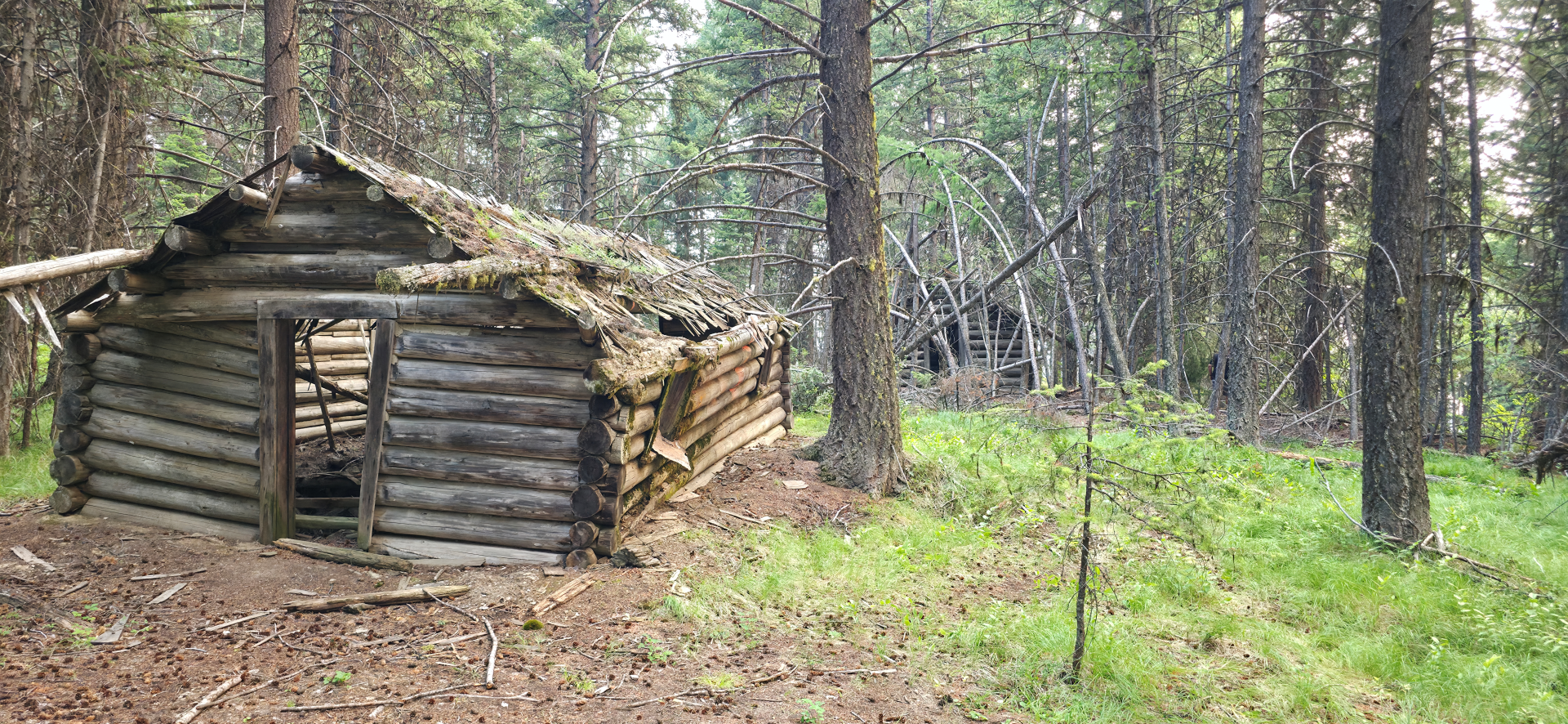
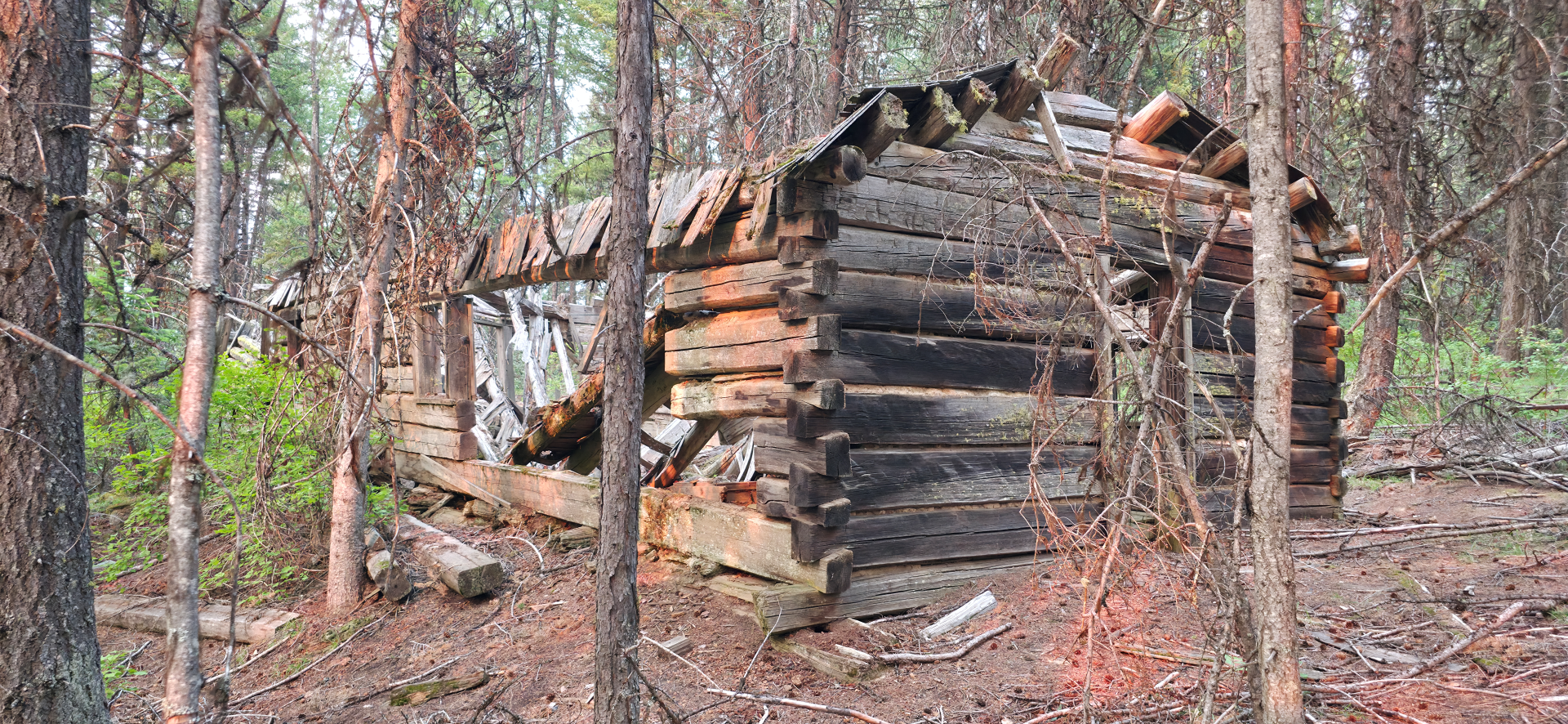
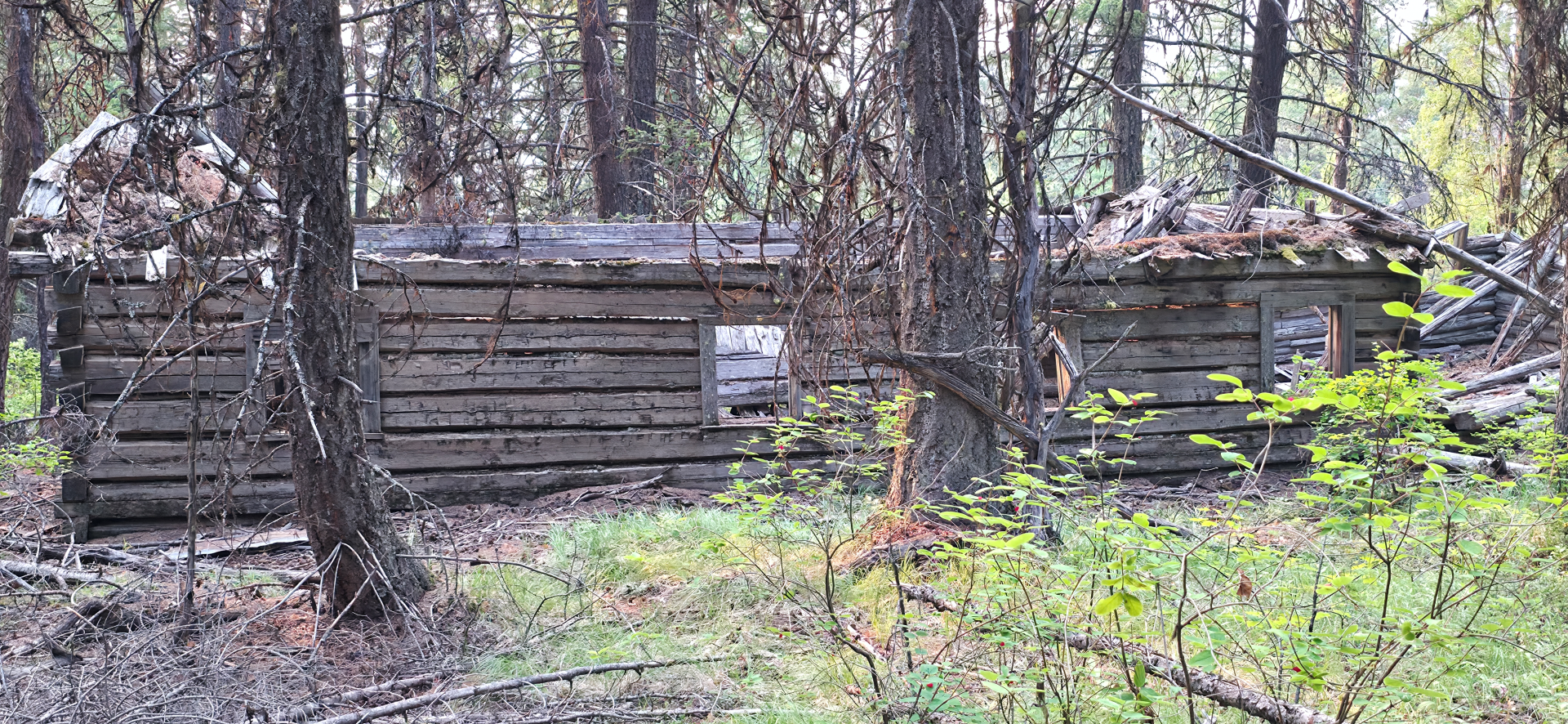
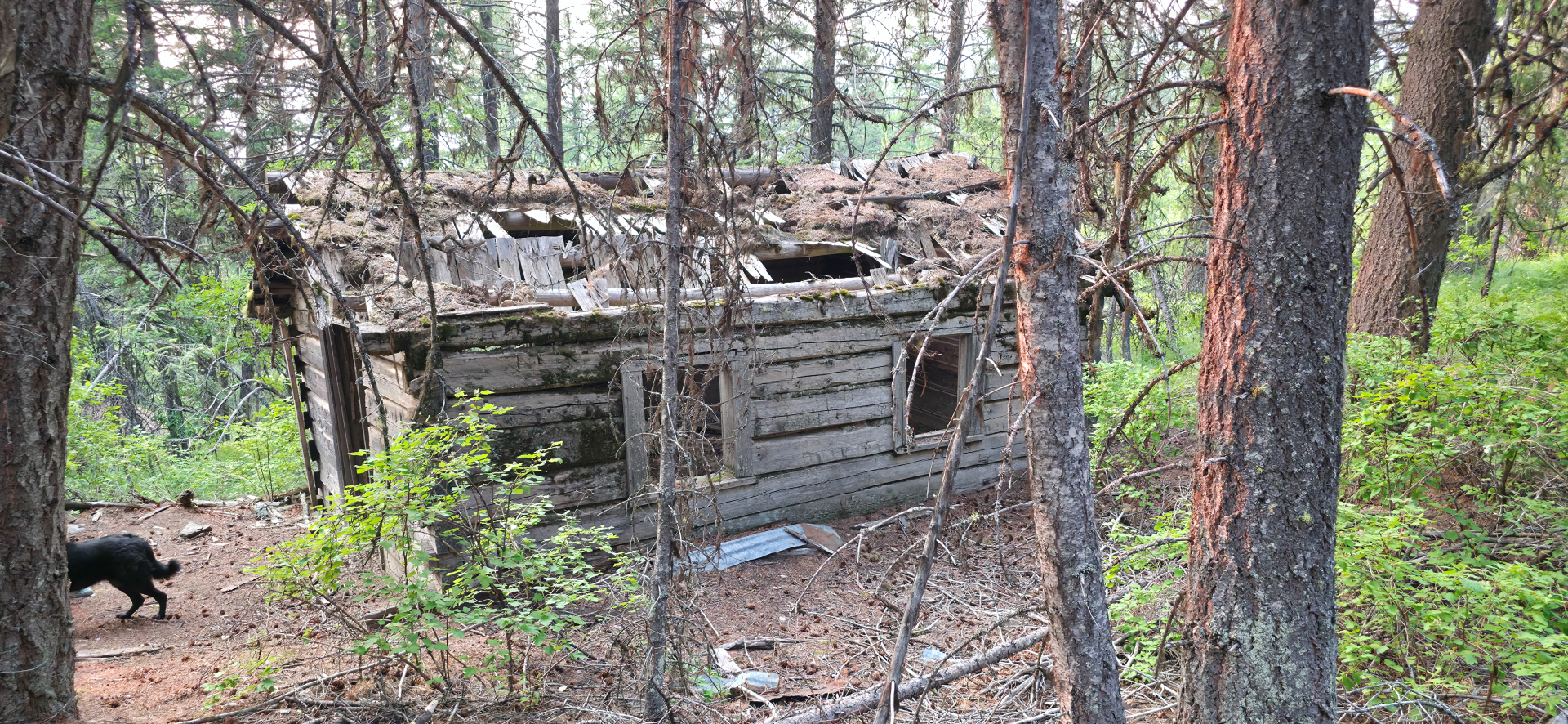
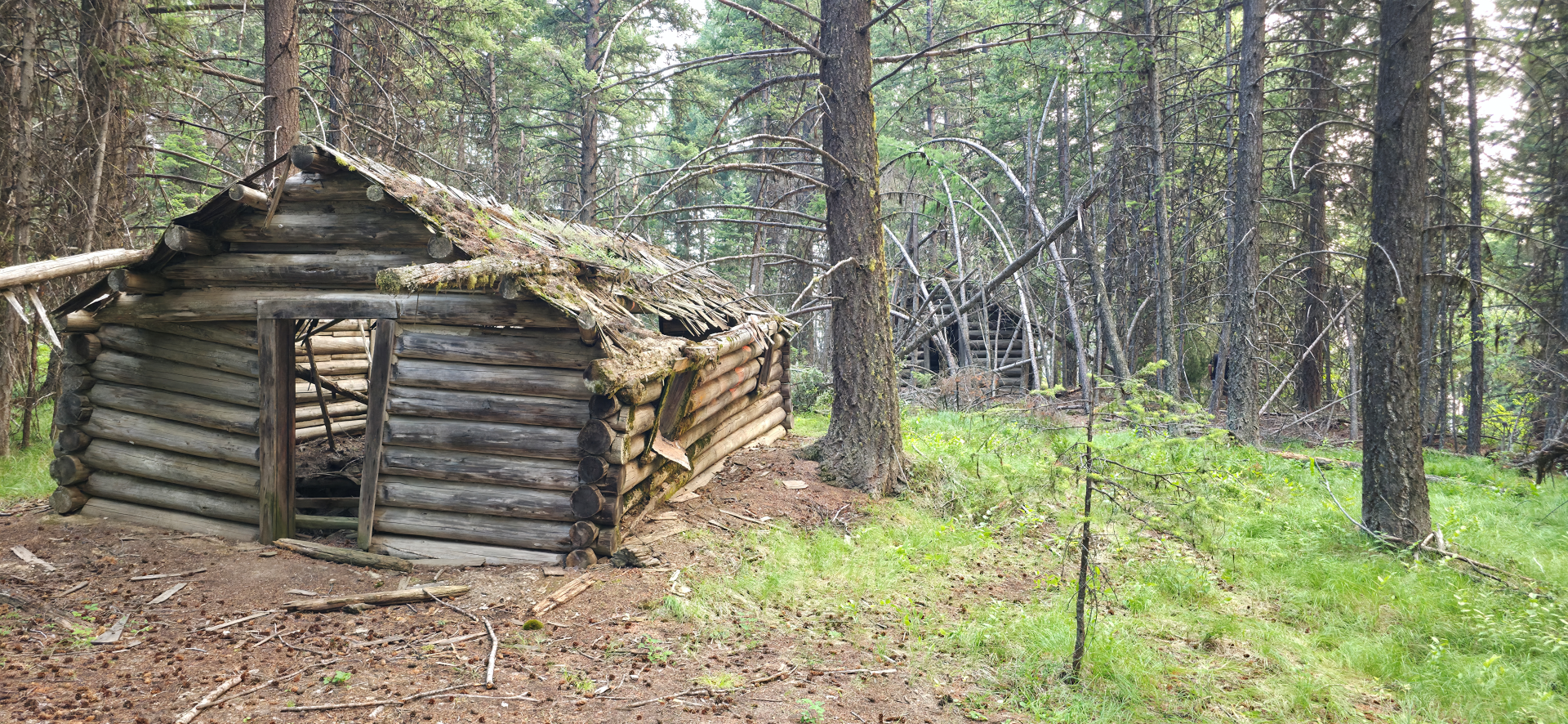
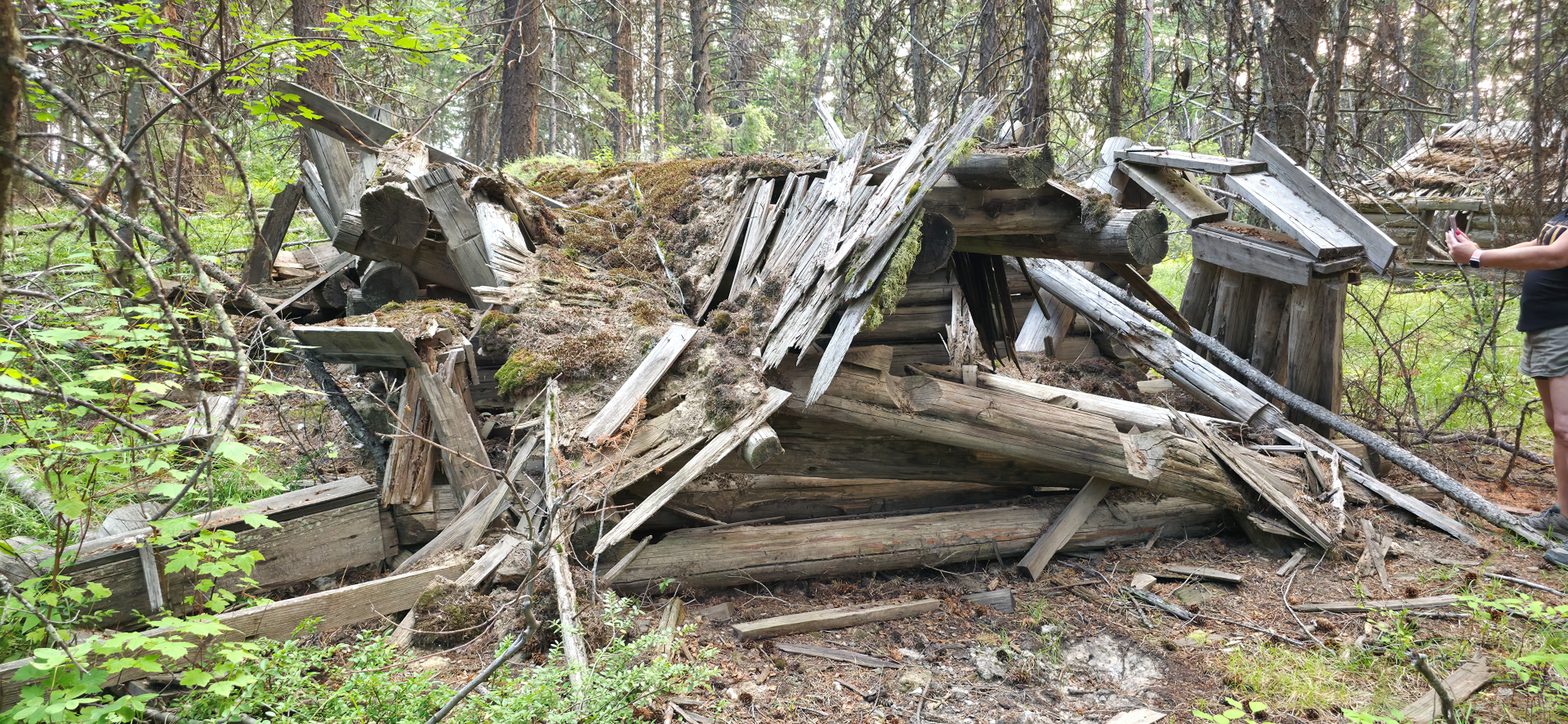
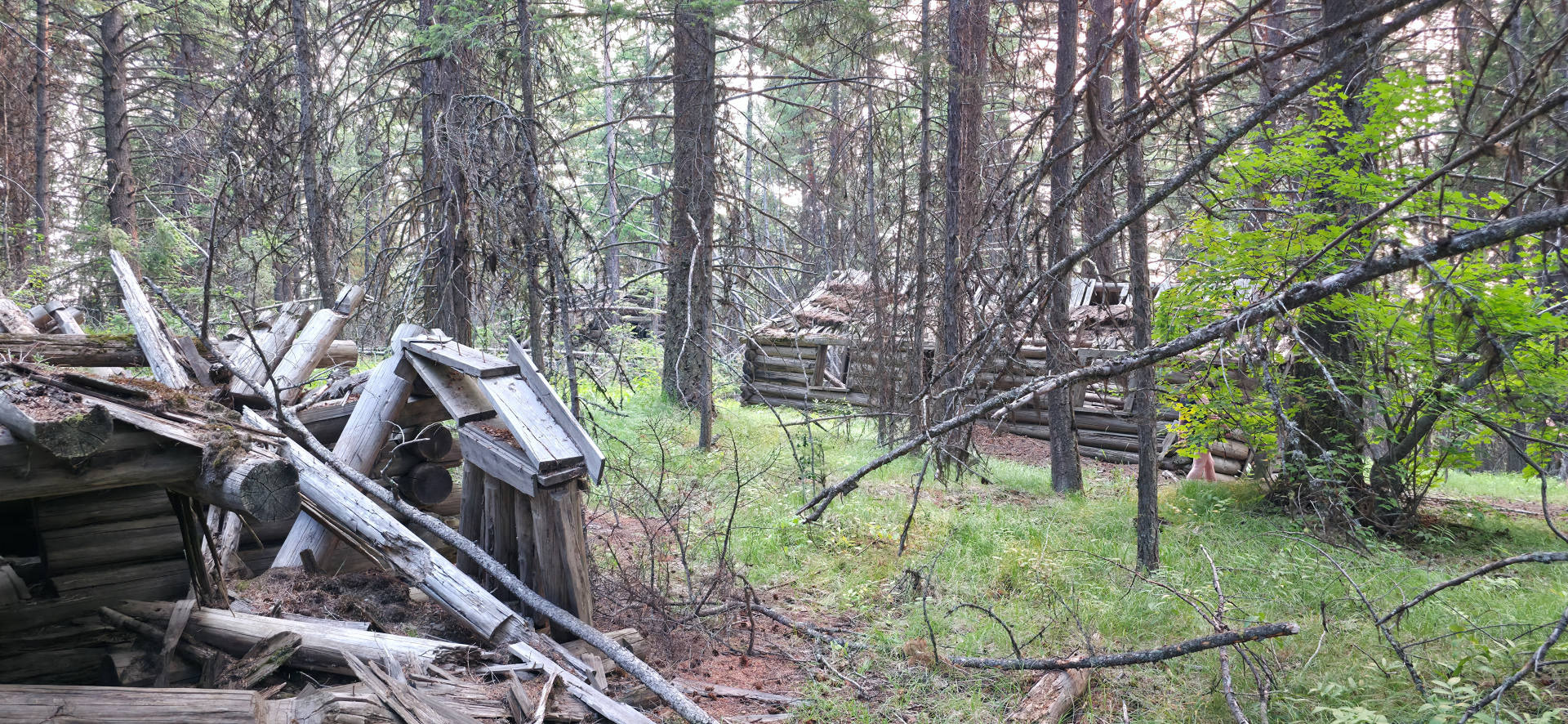
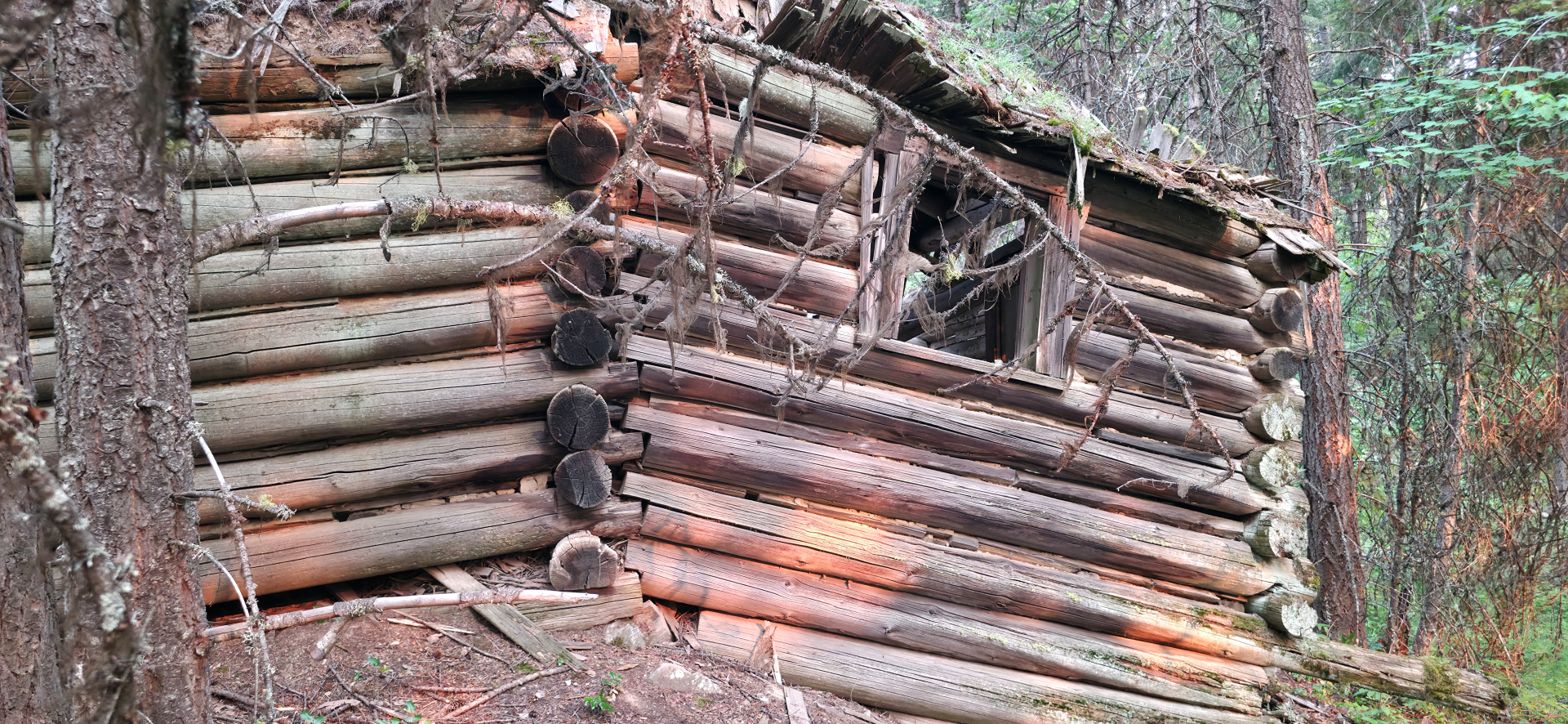
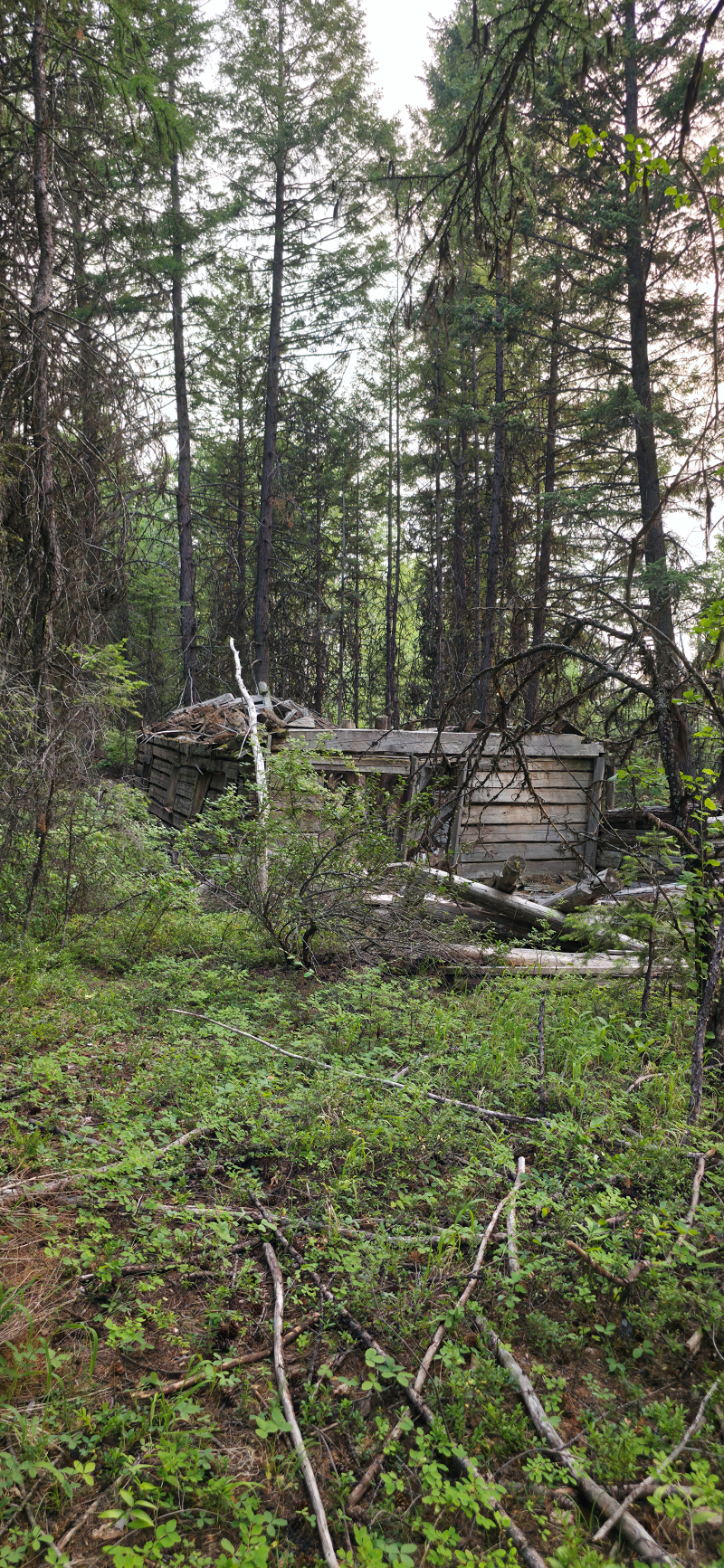
- The Log Cabin Base: The core log structures and cabins seen in these photos today were constructed during this initial turn-of-the-century rush to house the miners brave enough to face the high-altitude winters.
The CM&S Era & The Aerial Tramway (1909–1913)
- Corporate Buyout: In 1909, the mining giant Consolidated Mining and Smelting Co. (CM&S)—which later became Cominco—purchased the No. 7 mine.
- The Gravity-Powered Tramline: Moving ore down the steep mountain by horse-drawn wagons ("rawhiding") was incredibly difficult. To solve this, CM&S built an incredible 3-mile (6-kilometer) aerial tramway in 1910.
- Engineering Marvel: The gravity-powered line ran from the high mine ridge down to the railway loading bins at Boundary Falls. The massive weight of the descending, ore-filled steel buckets pulled the empty buckets back up the mountain. The ore was then dumped into CPR rail cars and shipped to regional smelters.
- The First Shutdown: Due to dropping ore grades, CM&S stopped production in 1913, and the historic tramway was eventually dismantled.
- In 1920, the entire Boundary Falls aerial tramway system from the No. 7 Mine was purchased by the Coalmont Collieries. It was carefully dismantled, transported over 200 kilometers west, and reassembled to service the booming coal mining town of Blakeburn (near Coalmont, BC)
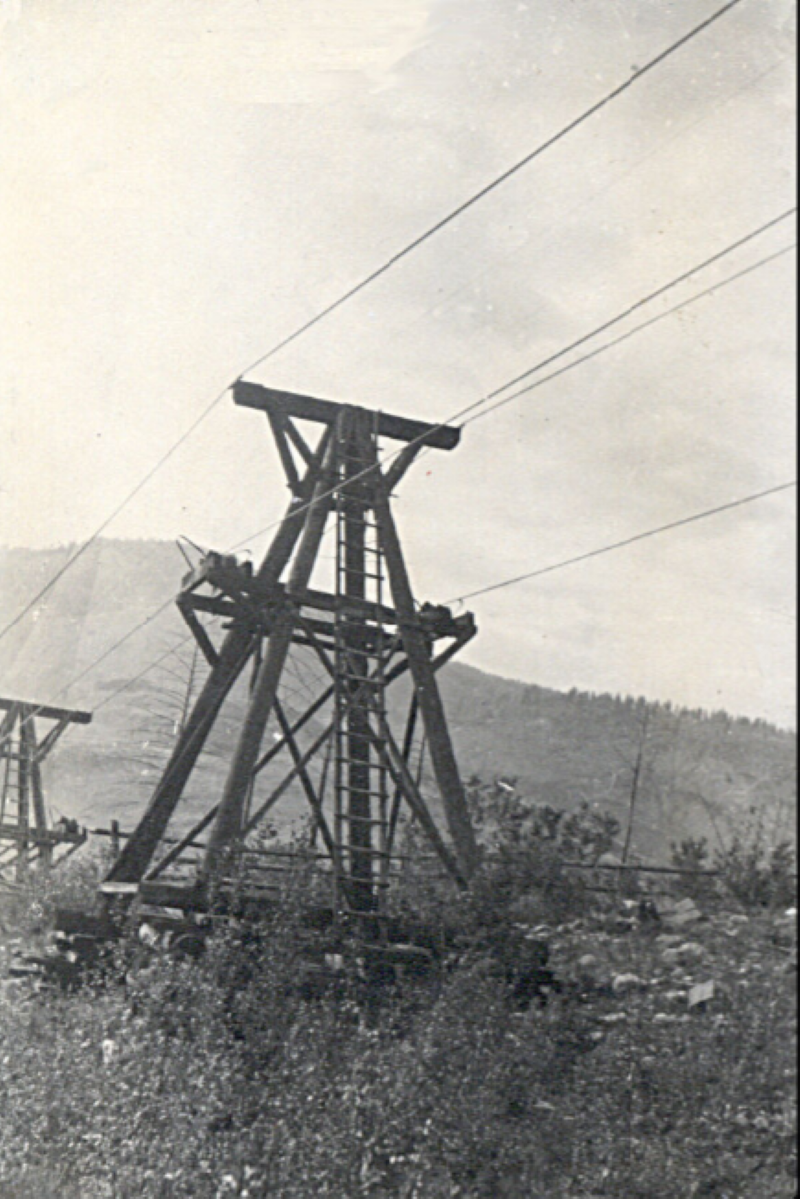
No. 7 tramline showing 2 towers
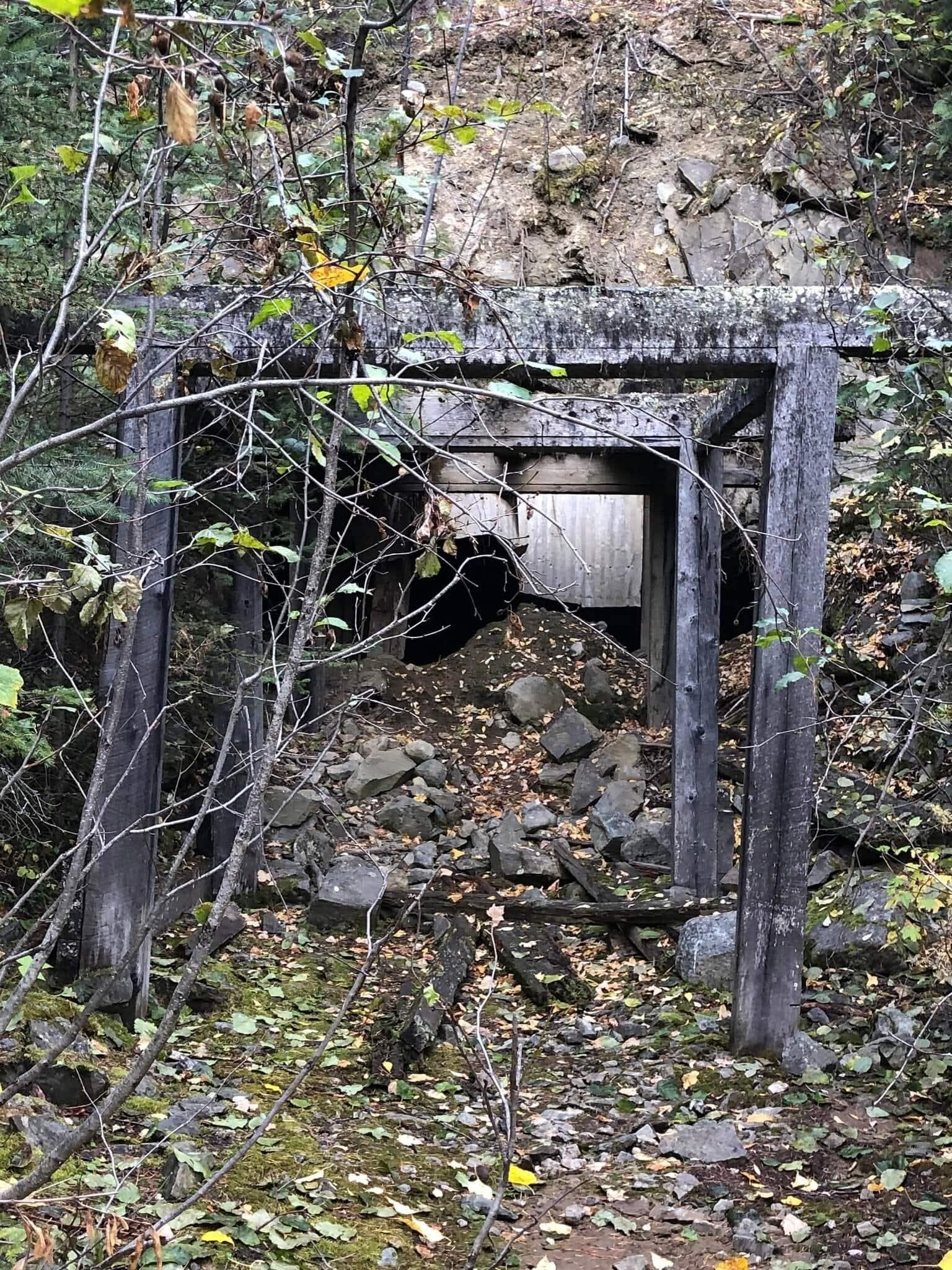
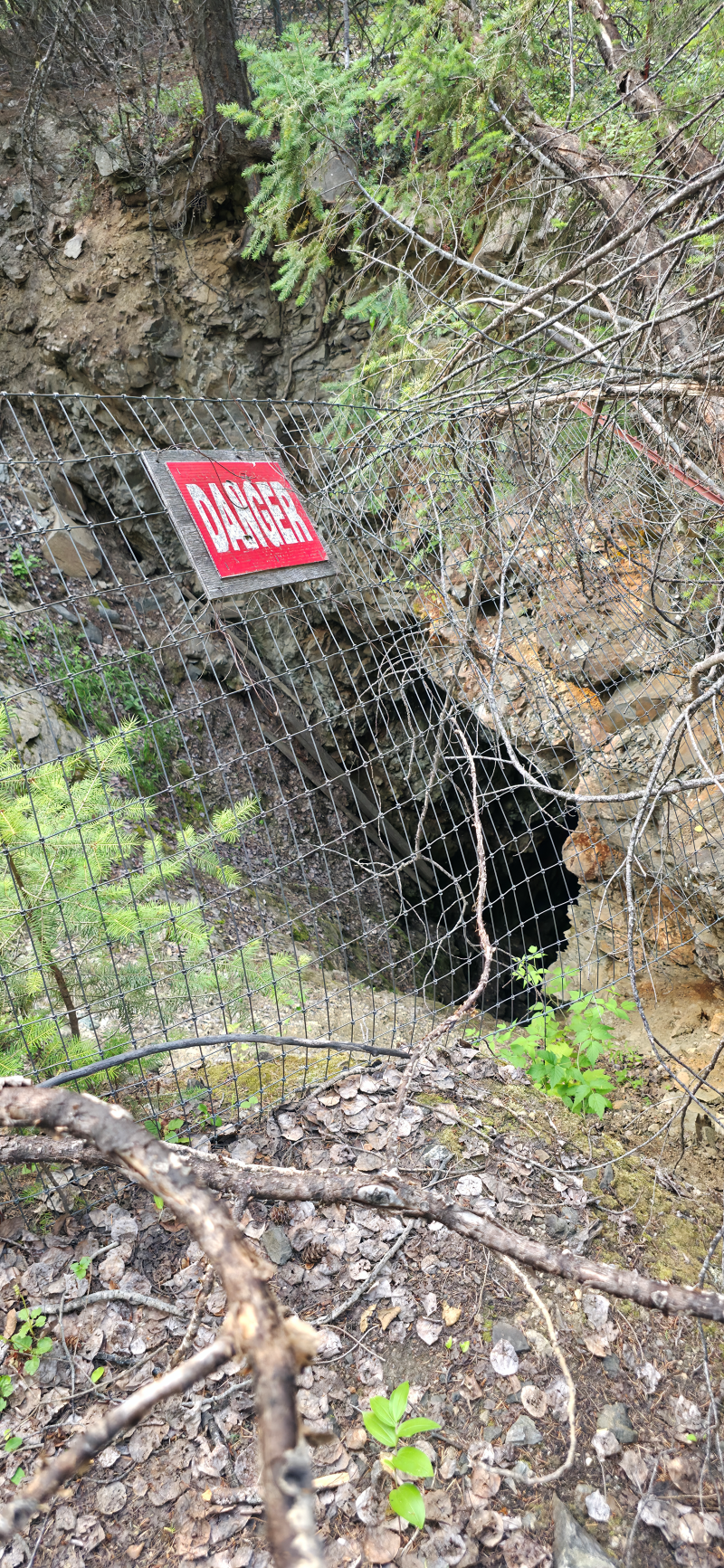
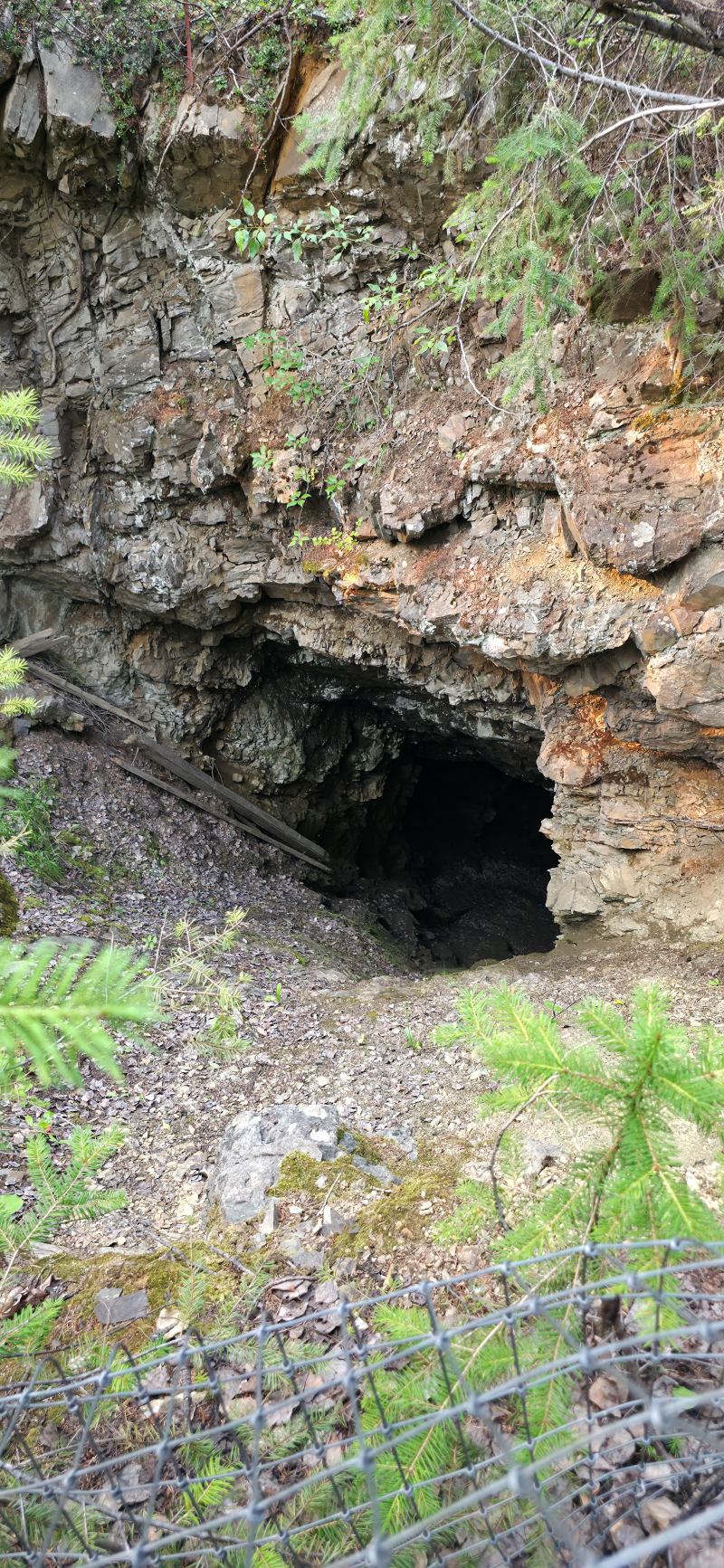
No.7 mine portal. Photo taken in 2023
The 1930s-40s Revival (The McArthur Years)
- The Lease: The camp lay quiet until 1934, when W.E. "Ted" McArthur, a prominent entrepreneur and later mayor of Greenwood, leased the No. 7 property.
- The Trucking Era: McArthur moved a small crew back into White's Camp. Instead of an aerial tramway, they used rugged early trucks to haul the high-grade gold and silver ore down the treacherous mountain switchbacks to the railway.
- Final Totals: Mining permanently ceased around 1945. Over its total operational lifetime, the No. 7 Mine produced 15,162 tons of ore, yielding roughly 203 lbs of gold, 6,842 lbs of silver, 107 tons of lead, and nearly 7 tons of zinc.
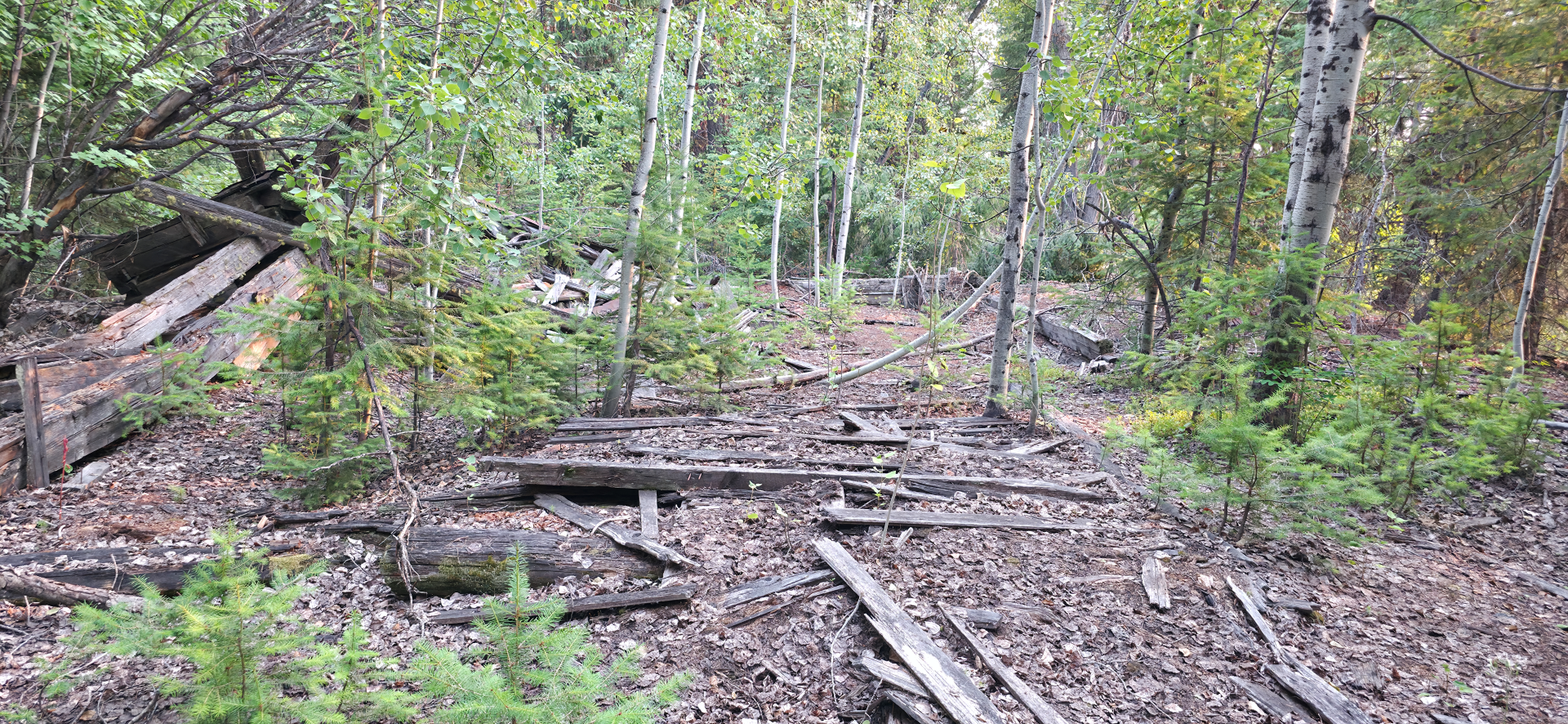
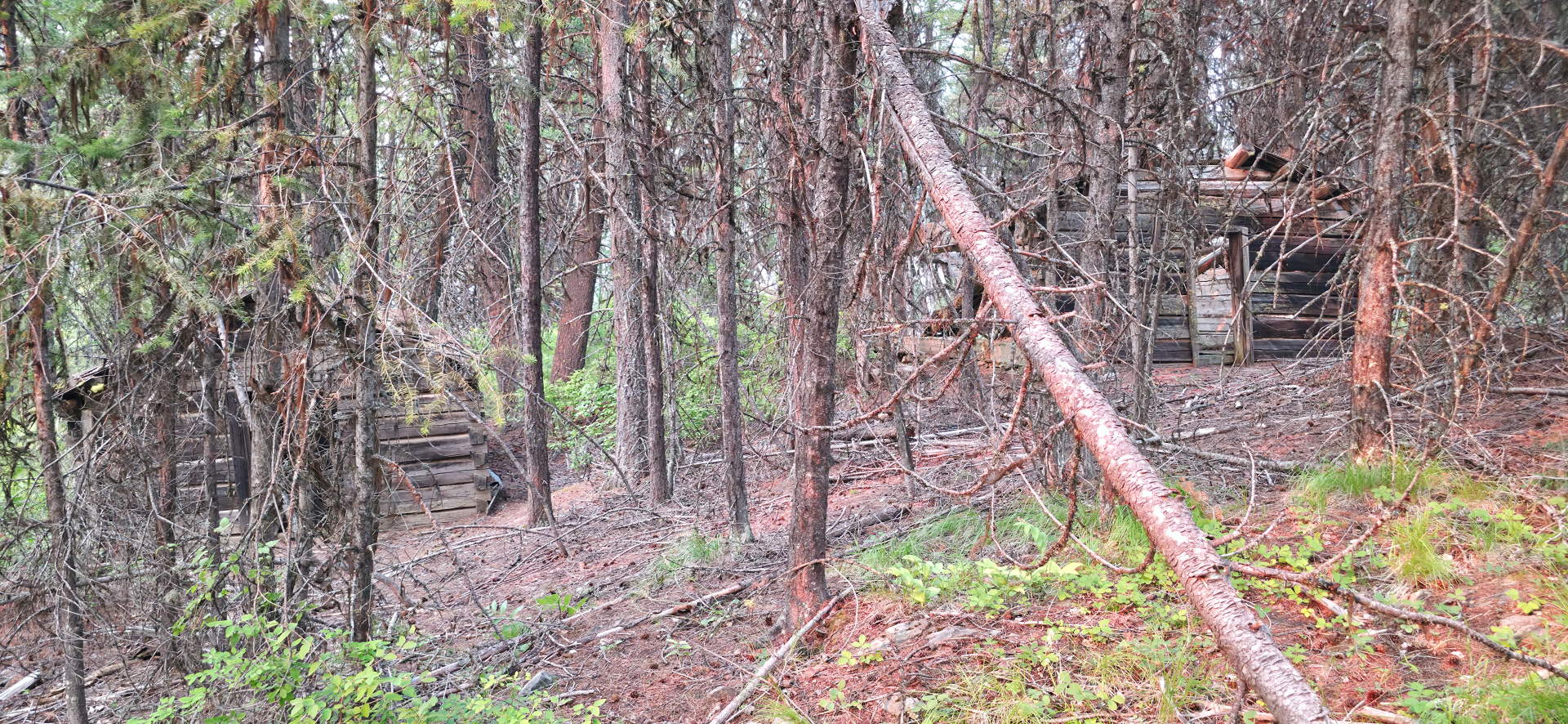
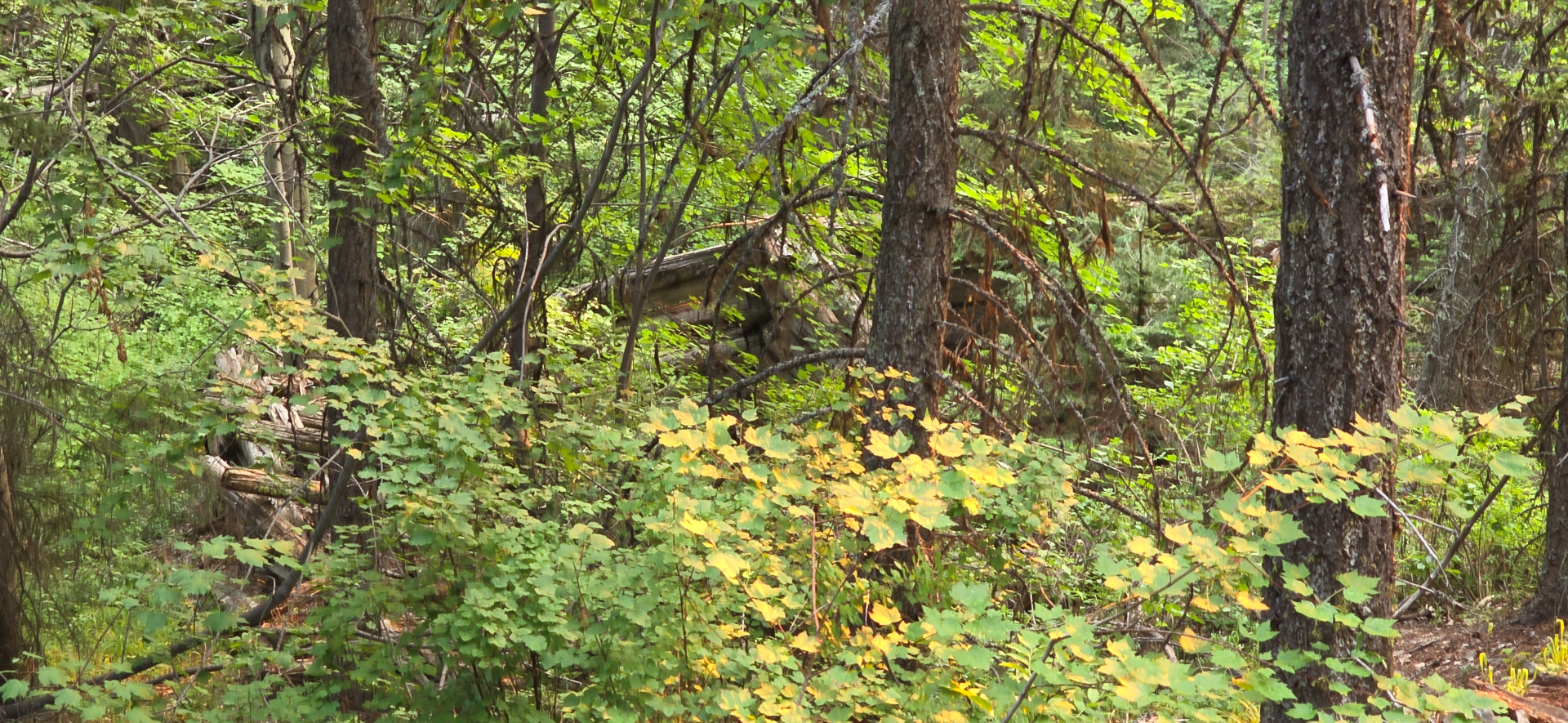
Other Photographs of this area
Enjoyed This Discovery?
There's more history waiting to be uncovered. Explore ghost towns, historic railways, mining camps, and backcountry discoveries across British Columbia.
← Back to The Explorer's Journal